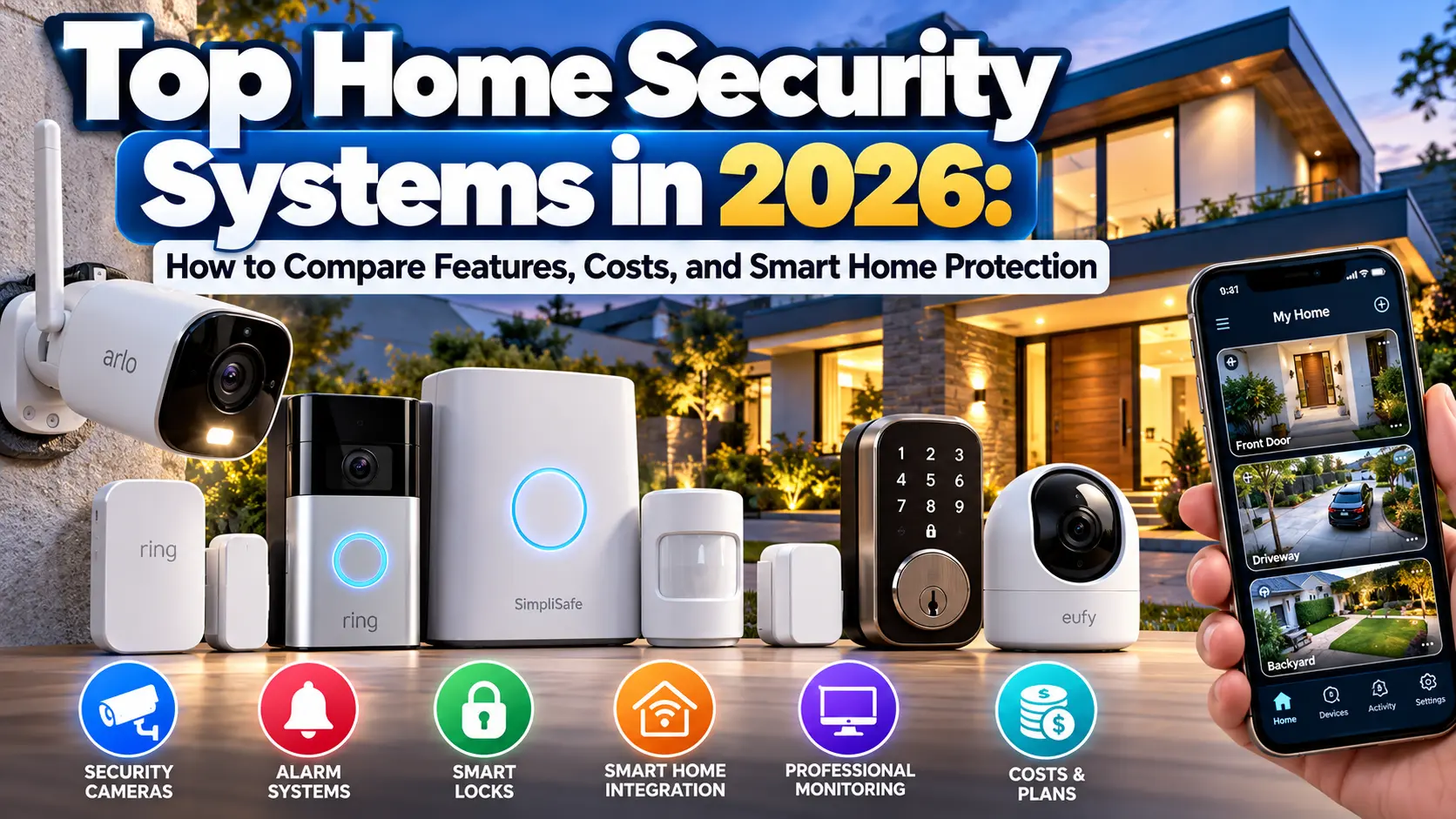
Home security technology has changed significantly in recent years. Traditional alarm systems have evolved into connected security ecosystems that can combine cameras, smart locks, motion sensors, door and window sensors, video doorbells, alarms, and mobile applications.
For homeowners researching the top home security systems, choosing the right solution is not simply about buying the most expensive equipment. A practical security system should match the size of the property, household needs, budget, internet connection, preferred monitoring method, and desired level of automation.
Modern systems can provide real-time notifications, remote access, video monitoring, smart-home integration, and automated security routines. Some systems are designed for do-it-yourself installation, while others rely on professional installation and 24/7 monitoring.
This guide explains how to compare home security systems in 2026, which features deserve attention, how different technologies work, and what to consider before purchasing.
What Is a Home Security System?
A home security system is a combination of devices and services designed to help detect, deter, and respond to potential security events.
A basic system may include door and window sensors, while a more advanced setup can include multiple cameras, motion detectors, smart locks, glass-break sensors, smoke detectors, and professional monitoring.
Most modern systems can be controlled through a smartphone application.
Depending on the equipment, homeowners may be able to:
- Arm or disarm the alarm remotely
- Receive motion alerts
- View security cameras
- Lock or unlock compatible doors
- Communicate through video doorbells
- Monitor doors and windows
- Create automated security routines
- Receive notifications about unusual activity
- Contact emergency monitoring services
The exact capabilities depend on the manufacturer, equipment, subscription, and installation configuration.
Why Home Security Systems Are Becoming More Popular
The development of smart-home technology has made residential security more accessible.
Instead of using separate devices from unrelated manufacturers, homeowners can increasingly connect security products into a single ecosystem.
For example, a homeowner could configure a routine where locking the front door automatically activates selected security sensors and cameras.
Another possible setup could send a smartphone notification when motion is detected near a particular entrance.
This combination of security and automation is one of the major reasons smart home security continues to attract consumers.
Important Features of the Top Home Security Systems
When comparing the top home security systems, focus on features rather than brand names alone.
1. Security Cameras
Security cameras are among the most recognizable components of a modern home security setup.
Depending on the model, cameras may offer:
- HD or higher-resolution video
- Night vision
- Wide-angle viewing
- Motion detection
- Two-way audio
- Person detection
- Activity notifications
- Cloud video storage
- Local storage
- Indoor or outdoor installation
Outdoor cameras should generally be designed for exposure to weather, while indoor cameras can focus more heavily on compact design and privacy controls.
2. Video Doorbells
A video doorbell combines a traditional doorbell with a security camera.
Depending on the model, homeowners may be able to see who is at the door, receive movement notifications, and communicate with visitors.
Video doorbells can be particularly useful for monitoring entrances, deliveries, and unexpected visitors.
When comparing models, look at camera quality, viewing angle, night vision, motion detection, storage options, and compatibility with your existing smart-home ecosystem.
3. Door and Window Sensors
Door and window sensors are simple but important components of many alarm systems.
A typical sensor detects whether an entry point is open or closed.
Homeowners can use these sensors to receive alerts when a protected door or window is opened.
For larger homes, sensor placement should be planned carefully to ensure important entry points are covered.
4. Motion Sensors
Motion sensors can detect movement within designated areas.
They may be useful for hallways, living rooms, garages, entrances, and other spaces where unauthorized movement should trigger an alert.
Modern systems may use different detection technologies and can offer settings designed to reduce unnecessary notifications.
5. Smart Locks
Smart locks add another layer of convenience and access control.
Depending on the product, users may be able to unlock a door using:
- Smartphone apps
- PIN codes
- Fingerprints
- Physical keys
- Temporary digital credentials
- Compatible smart-home platforms
Some smart locks can also provide activity logs, allowing homeowners to see when compatible access methods were used.
6. Professional Monitoring
Professional monitoring is an optional service offered by some security providers.
When an alarm event occurs, a monitoring center may receive an alert and follow the provider’s established response procedures.
The exact process varies between providers and plans.
Consumers should carefully review what events are monitored, how verification works, what communication methods are supported, and what monthly fees apply.
DIY vs. Professionally Installed Home Security
One of the biggest decisions when selecting a home security system is whether to install it yourself or use professional installation.
DIY Home Security Systems
DIY systems are designed to be installed by the homeowner.
Advantages can include:
- Easier installation
- Lower installation costs
- Flexible device placement
- Easy relocation
- Greater control over equipment
DIY systems can be particularly attractive to renters or homeowners who prefer managing their own equipment.
However, the homeowner is responsible for correctly positioning and configuring the devices.
Professionally Installed Systems
Professional installation means a technician handles some or all of the installation process.
Potential benefits include:
- Expert equipment placement
- More complex installations
- Assistance with configuration
- Integration of multiple security devices
- Reduced installation work for the homeowner
The tradeoff is that professional installation may involve additional fees or service requirements.
Top Home Security Systems: Popular Options to Compare
Consumers researching the top home security systems may encounter several major brands and technology ecosystems.
ADT
ADT is a long-established home security provider offering professionally oriented security solutions.
Depending on the available package, customers may have access to alarms, sensors, cameras, smart-home integrations, and professional monitoring.
ADT can be considered by homeowners looking for a more traditional security-provider model.
Ring
Ring is widely associated with video doorbells and connected home security products.
Its product ecosystem can include doorbells, cameras, alarm equipment, and related smart-home devices.
Ring products can be appealing to consumers interested in starting with a camera or doorbell and expanding their system over time.
SimpliSafe
SimpliSafe focuses on customizable home security equipment and DIY-oriented installation.
A typical system can be expanded with different sensors, cameras, and other security components depending on the package.
This approach can be useful for homeowners who want flexibility in configuring their security equipment.
Google Nest
Google offers Nest-branded smart-home and security products.
The ecosystem can integrate security cameras and other smart-home technologies with compatible Google services.
Consumers already using compatible smart-home products may want to consider ecosystem compatibility when evaluating security equipment.
Arlo
Arlo Technologies specializes in connected security cameras and related smart-home security equipment.
Its product range focuses heavily on video monitoring, making camera specifications and storage options important considerations for consumers.
How Much Do Home Security Systems Cost?
The cost of a home security system can vary substantially.
The total expense may include:
- Equipment
- Installation
- Monthly monitoring
- Cloud storage
- Premium software features
- Replacement batteries
- Additional sensors
- Additional cameras
- Smart locks
- Maintenance
A basic DIY setup may require a relatively small initial investment, while a larger professionally installed system with multiple cameras and monitoring can cost significantly more.
Instead of comparing only the initial equipment price, calculate the estimated total cost over one, three, or five years.
For example:
Total estimated cost = equipment + installation + recurring subscription fees + optional services
This approach can reveal the difference between inexpensive equipment and a more comprehensive long-term security solution.
What to Look for in Home Security Cameras
If cameras are an important part of your security strategy, compare their technical specifications carefully.
Resolution
Higher resolution can provide more visual detail, although image quality also depends on lighting, lens quality, compression, and other factors.
Night Vision
Night vision is important for outdoor cameras and areas with limited lighting.
Field of View
A wider field of view can cover more space from a single camera, but placement remains important.
Two-Way Audio
Two-way audio allows users to communicate through a compatible camera.
Storage
Security cameras may use cloud storage, local storage, or a combination of both.
Review how long recordings are retained and whether a subscription is required.
Privacy
Privacy should be considered carefully when installing cameras.
Avoid positioning cameras toward areas where privacy is expected, and review the manufacturer’s privacy settings, account security features, and data practices.
Smart Home Integration
One major advantage of modern security systems is integration with other smart-home devices.
Depending on compatibility, security equipment may work with:
- Smart lights
- Smart thermostats
- Smart speakers
- Smart locks
- Garage door controllers
- Voice assistants
- Home automation platforms
For example, a smart-home routine might turn on exterior lights when motion is detected.
Another routine could lock compatible doors automatically at a scheduled time.
Before purchasing multiple products, check whether they support the same smart-home ecosystem.
Compatibility can prevent homeowners from building a collection of devices that cannot communicate with each other.
Home Security System Features Comparison
| Feature | Basic System | Advanced System | Professional System |
|---|---|---|---|
| Door Sensors | Usually | Yes | Yes |
| Window Sensors | Optional | Yes | Yes |
| Motion Detection | Optional | Yes | Yes |
| Security Cameras | Optional | Multiple | Multiple |
| Video Doorbell | Optional | Available | Available |
| Smart Locks | Optional | Available | Available |
| Mobile App | Often | Yes | Yes |
| Professional Monitoring | Optional | Optional | Often available |
| Professional Installation | Usually no | Optional | Often available |
| Smart-Home Integration | Limited/Varies | Extensive | Varies |
The right configuration depends on the property rather than simply selecting the system with the largest number of features.
How to Choose the Right Home Security System
Before purchasing, evaluate your property.
Consider the Size of Your Home
A small apartment may require only a door sensor, camera, and alarm.
A large house may require several outdoor cameras, multiple motion sensors, window sensors, and additional entry-point protection.
Consider Your Entry Points
Make a list of:
- Front door
- Back door
- Garage
- Ground-floor windows
- Patio doors
- Side entrances
- Basement entrances
This helps determine how many sensors and cameras are required.
Consider Your Internet Connection
Many smart security products depend on an internet connection.
If your internet service is unreliable, investigate what happens when the connection is interrupted.
Some systems can maintain certain local functions or use alternative communication methods, while others may have reduced functionality.
Consider Power Outages
Security systems may depend on electrical power.
Check whether the system includes battery backup and how long critical components can continue operating during an outage.
How to Improve Home Security Without Spending a Fortune
A complete smart security system is not the only way to improve residential security.
Simple improvements can complement electronic security equipment.
Consider:
- Installing strong exterior lighting
- Reinforcing vulnerable doors
- Using quality locks
- Keeping valuable items out of sight
- Maintaining clear visibility around entrances
- Securing garage access
- Updating passwords
- Enabling multi-factor authentication
- Keeping security devices updated
- Reviewing camera placement regularly
A layered approach combines physical security, technology, good household practices, and appropriate monitoring.
Home Security and Cybersecurity
Connected security devices are part of your digital environment, so cybersecurity should not be ignored.
Use strong, unique passwords for security accounts.
Enable multi-factor authentication whenever supported.
Keep cameras, hubs, routers, and smart locks updated with the latest available software.
It is also important to secure your home Wi-Fi network.
Avoid sharing security account credentials with people who do not need access.
For households with multiple users, use official account-sharing or access-management features when available instead of sharing one password.
Frequently Asked Questions
What are the top home security systems in 2026?
The market includes providers and ecosystems such as ADT, Ring, SimpliSafe, Google Nest, and Arlo, among many others. The appropriate choice depends on installation preferences, equipment requirements, monitoring needs, smart-home compatibility, and budget.
Are DIY home security systems reliable?
DIY systems can provide useful security features when properly installed and configured. Their effectiveness depends on equipment quality, placement, connectivity, maintenance, and how the homeowner uses the system.
Do I need professional monitoring?
Not every homeowner needs professional monitoring. Some consumers prefer self-monitoring through smartphone notifications, while others prefer a professional monitoring service. Consider your availability, household needs, and desired response process.
Are home security cameras worth buying?
Security cameras can provide visual information about activity around a property. Their usefulness depends on proper placement, image quality, lighting, connectivity, storage, and the homeowner’s monitoring habits.
How many security cameras does a house need?
There is no universal number. A homeowner should consider important areas such as front entrances, back entrances, garages, driveways, and other locations where monitoring is appropriate.
Can smart locks replace traditional locks?
Smart locks provide electronic access features but should be selected based on the door’s compatibility, security characteristics, backup access method, battery life, and manufacturer’s specifications.
What is the difference between an alarm system and a smart security system?
An alarm system primarily focuses on detecting and alerting homeowners to security events. A smart security system can combine alarms with cameras, locks, sensors, mobile apps, automation, and other connected devices.
Final Thoughts
Choosing among the top home security systems requires more than looking at the number of devices included in a package.
A useful security setup should match your home’s layout, entry points, lifestyle, technology preferences, and budget. Cameras, door sensors, motion detectors, smart locks, video doorbells, alarms, and professional monitoring can all play different roles in a layered security strategy.
Before buying, compare equipment costs, installation fees, subscription requirements, storage options, monitoring services, smart-home compatibility, privacy features, and long-term expenses.
For homeowners who prefer flexibility, a DIY system can provide a customizable starting point. Those who want professional assistance may consider professionally installed and monitored solutions.
The most important step is to understand what your property actually needs. By comparing features and total costs rather than focusing solely on brand names, you can build a home security setup that provides practical protection while fitting your household’s needs in 2026.